
What to Expect When Your Baby with HIE Is in the NICU

Few moments are more overwhelming for parents than hearing that their newborn has been diagnosed with Hypoxic-Ischemic Encephalopathy (HIE) and needs care in the Neonatal Intensive Care Unit (NICU). The NICU can feel intimidating at first — filled with monitors, alarms, medical terms, and uncertainty.
This overview is designed to help parents understand what may happen during the first hours, days, and weeks after an HIE diagnosis so you can feel more informed and prepared during an incredibly difficult time.
What Is HIE?
Hypoxic-Ischemic Encephalopathy (HIE) is a type of brain injury caused by reduced oxygen and blood flow to a baby’s brain before, during, or shortly after birth. HIE can occur after complications such as:
- Delayed emergency C-section
- Umbilical cord compression or prolapse
- Placental abruption
- Uterine rupture
- Severe fetal distress
- Maternal bleeding or infection
- Failure to respond to abnormal fetal heart rate patterns
The severity of HIE can range from mild to severe. Some babies recover well, while others may experience long-term disabilities including cerebral palsy, developmental delays, seizure disorders, feeding difficulties, or learning challenges.
 Why Babies with HIE Go to the NICU
The NICU provides specialized monitoring and treatment for babies who experienced oxygen deprivation during birth. The first 72 hours are often critical because doctors are trying to:
- Stabilize breathing and circulation
- Prevent additional brain injury
- Monitor for seizures
- Evaluate organ damage
- Support feeding and nutrition
- Determine the severity of injury
Many parents are shocked by how quickly a delivery room emergency can turn into a NICU admission. It is common to feel frightened, numb, confused, or unable to process information in the beginning.
The First Few Hours After Birth
Immediately after delivery, your baby may require resuscitation. This can include:
- Oxygen support
- Intubation and mechanical ventilation
- Chest compressions
- Emergency medications
- IV placement
- Blood tests
Doctors may perform Apgar scoring at 1, 5, and 10 minutes after birth to assess how well the baby is responding.
Babies with suspected HIE are often transferred rapidly to a higher-level NICU that specializes in neonatal neurological care.
Whole-Body Cooling Therapy
One of the most important treatments for moderate or severe HIE is therapeutic hypothermia, often called whole-body cooling.
This treatment lowers the baby’s body temperature for approximately 72 hours to slow the cascade of brain injury that can continue after oxygen deprivation.
During cooling therapy:
- Your baby may lie on a cooling blanket or cooling mattress
- The body temperature is carefully controlled
- Sedation medications may be used
- Continuous brain monitoring is common
- Nurses frequently check vital signs and blood work
Parents are often surprised that they may not be able to hold their baby during portions of cooling therapy. This can be emotionally devastating, but it is done to help protect the brain during a critical period.
 What All the NICU Machines and Monitors Mean
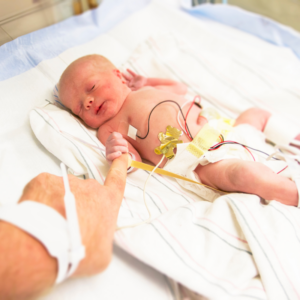
The NICU environment can feel overwhelming. Understanding some of the common equipment may reduce anxiety.
Heart and Oxygen Monitors
Sticky sensors monitor:
- Heart rate
- Oxygen saturation
- Respiratory rate
- Blood pressure
Alarms may sound frequently and do not always mean an emergency.
EEG Monitoring
Many babies with HIE undergo continuous EEG monitoring to detect seizures.
Seizures in newborns are not always visible. Some are only detectable on EEG.
Ventilator or CPAP
If your baby has breathing difficulties, they may need:
- Mechanical ventilation
- CPAP support
- Supplemental oxygen
IV Lines and Umbilical Lines
These provide:
- Fluids
- Nutrition
- Medications
- Blood pressure support
Feeding Tubes
Some HIE babies cannot safely feed by mouth initially and may require tube feeding.
Seizures in Babies With HIE
Seizures are common after oxygen deprivation injuries.
Signs may include:
- Lip smacking
- Eye deviation
- Repetitive movements
- Jerking
- Apnea episodes
- Staring spells
Some babies have silent seizures detectable only through EEG monitoring.
Doctors may use anti-seizure medications such as:
- Phenobarbital
- Levetiracetam (Keppra)
Seizures do not automatically mean a poor outcome, but they are an important sign that the brain has been stressed or injured.
Brain MRI: What Parents Should Expect
A brain MRI is one of the most important tools doctors use to evaluate HIE injury.
The MRI is often performed several days after cooling therapy ends.
It may help identify:
- Areas of brain injury
- Severity of damage
- Patterns associated with cerebral palsy risk
- Injury to deep brain structures
Parents often wait anxiously for MRI results because they can provide clues about long-term outcomes. However, MRI findings do not always predict exactly how a child will develop.
Some children outperform expectations, while others develop challenges later that were not immediately obvious.
Feeding Problems and Swallowing Difficulties
Many babies with HIE struggle with feeding in the NICU.
This may happen because oxygen deprivation can affect:
- Muscle tone
- Coordination
- Swallowing reflexes
- Sucking ability
- Breathing coordination
Some babies progress to bottle or breastfeeding quickly.
Others may require:
- Nasogastric (NG) tubes
- Occupational therapy
- Speech therapy
- Long-term feeding support
- G-tube placement in severe cases
Feeding progress is often one of the major milestones doctors evaluate before NICU discharge.
Other Organs Can Be Affected Too
HIE does not only affect the brain.
Because oxygen deprivation impacts the entire body, doctors may monitor:
- Heart function
- Kidney function
- Liver function
- Lung injury
- Blood clotting problems
Many babies improve as oxygen levels stabilize, but some require additional treatment for organ dysfunction.
 Questions Parents Should Ask in the NICU
Parents often feel overwhelmed during medical rounds. Writing questions down can help.
Helpful questions may include:
- What severity of HIE does my baby have?
- Is cooling therapy being used?
- Has my baby had seizures?
- What does the EEG show?
- When will the MRI be performed?
- Are other organs affected?
- What specialists are involved?
- What therapies may be needed after discharge?
- What developmental follow-up should we expect?
You are allowed to ask for explanations in plain language. Many parents hear unfamiliar medical terms while under extreme emotional stress.
Emotional Trauma for Parents
Parents of HIE babies often experience:
- Shock
- Guilt
- Anxiety
- Sleep deprivation
- Depression
- Fear of the future
- Trauma related to the birth
Many families replay the labor and delivery repeatedly, wondering whether warning signs were missed.
These reactions are common after a traumatic birth emergency.
Support from NICU social workers, therapists, support groups, and trusted family members can be important during this period.
Going Home From the NICU
NICU discharge can bring both relief and fear.
Before discharge, doctors may evaluate:
- Feeding safety
- Breathing stability
- Seizure control
- Weight gain
- Follow-up appointments
- Therapy needs
Your baby may need ongoing care from:
- Neurology
- Physical therapy
- Occupational therapy
- Speech therapy
- Developmental specialists
- Gastroenterology
Some children develop normally after HIE.
Others may show developmental delays over time.
Early intervention services are often extremely important.
Final Thoughts
Having a baby with HIE in the NICU is one of the most frightening experiences a parent can face.
The uncertainty can feel unbearable, especially during the first days after birth when doctors are still learning the extent of injury and monitoring for complications.
While every HIE journey is different, understanding the NICU process can help parents feel more informed and empowered.
You do not need to understand every monitor, lab result, or medical term immediately.
Take one hour, one conversation, and one day at a time.
And remember: asking questions, seeking support, and advocating for your child are all important parts of the journey ahead.
Frequently Asked Questions About HIE Babies in the NICU
How long do HIE babies stay in the NICU?
NICU stays vary depending on severity. Some babies remain for several days, while others may require weeks or longer.
Can babies recover fully from HIE?
Some babies with mild HIE recover with few or no long-term effects. Others may develop neurological disabilities that become more apparent over time.
Does every HIE baby have seizures?
No. Some babies experience seizures, while others do not.
When is the MRI usually done?
Many NICUs perform MRI several days after cooling therapy is completed.
Will my baby need therapy after discharge?
Many HIE babies benefit from early intervention therapies even if symptoms appear mild initially.