
What is a nuchal cord and can it cause HIE?
What Is a Nuchal Cord?
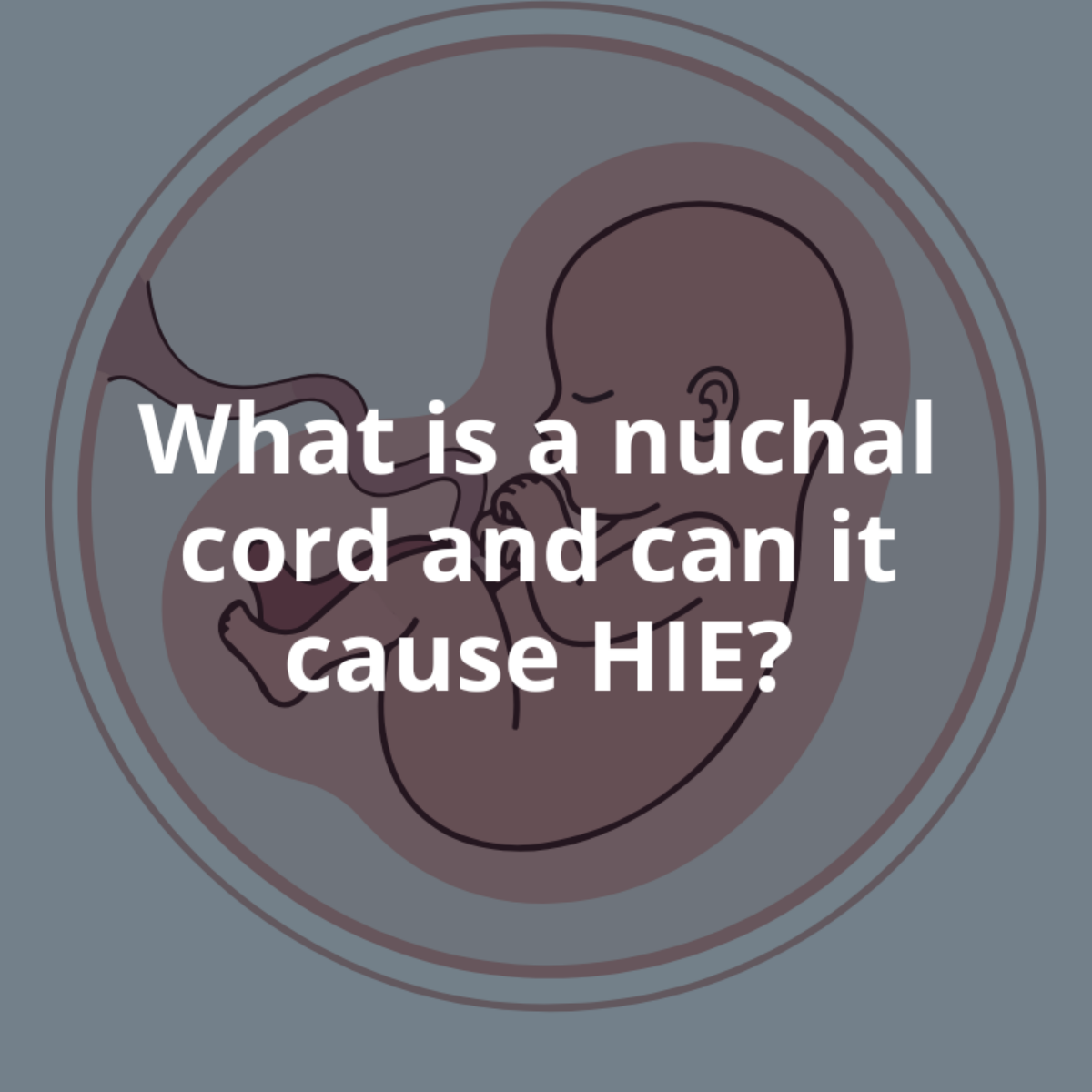
A nuchal cord occurs when the umbilical cord becomes wrapped around a baby’s neck before or during birth.
The umbilical cord connects the baby to the placenta and carries oxygen and nutrients to the baby. Because babies move during pregnancy, the cord can sometimes loop around the baby’s neck.
A nuchal cord can be:
- Loose or tight
- Wrapped around the neck once or multiple times
- Present temporarily and then clear away
- Present during labor and delivery
Nuchal cords are relatively common. Most babies with a nuchal cord are born healthy and do not develop brain injury.
Can a nuchal cord cause HIE?
It can, but not every nuchal cord causes oxygen deprivation or HIE.
HIE—hypoxic-ischemic encephalopathy—occurs when the baby’s brain does not receive enough oxygen and/or blood flow for long enough to cause brain injury.
A nuchal cord could potentially contribute to HIE if it becomes sufficiently compressed to interfere with blood flow through the umbilical vessels. However, determining whether this actually happened requires looking at the entire clinical picture, rather than simply finding a cord around the baby’s neck.
For example, doctors may consider:
- Changes in the baby’s fetal heart rate during labor
- Whether the heart-rate abnormalities suggested reduced oxygen delivery
- How long the abnormalities lasted
- Whether the baby recovered between contractions
- Umbilical cord blood-gas results
- Apgar scores
- Whether the baby required significant resuscitation
- Evidence of seizures or other signs of neonatal encephalopathy
- MRI findings
- Whether therapeutic hypothermia (cooling) was required
- Placental and umbilical-cord findings
- Whether there were other possible causes of oxygen deprivation
What happens when the cord is around the baby’s neck?
A baby’s neck is not necessarily being “choked” simply because the cord is around it.
The important issue is whether the cord is compressed enough to interfere with circulation through the umbilical cord.
During labor, contractions temporarily reduce blood flow through the placenta. If a cord is also significantly compressed, the combination can sometimes reduce oxygen delivery to the baby.
This can produce characteristic fetal heart-rate changes.
If oxygen deprivation becomes severe and prolonged enough, the baby can develop metabolic acidosis and, ultimately, hypoxic-ischemic brain injury.
 What signs might doctors see?
One of the most important sources of information is the fetal heart-rate tracing during labor – the continuous recording doctors and nurses use during labor to monitor the baby’s heart rate and how it responds to contractions.
Doctors may become concerned when there are significant abnormalities such as:
- Recurrent variable decelerations
- Prolonged decelerations
- Bradycardia
- Loss of variability
- A pattern suggesting the baby is no longer tolerating labor
A variable deceleration can occur when the umbilical cord is compressed. Variable decelerations do not automatically mean the baby is being injured. Many babies have them and recover normally.
The concern increases when abnormalities become persistent, severe, or associated with other evidence that the baby is not receiving adequate oxygen.
 What happens after birth?
If a baby has experienced significant oxygen deprivation, doctors may see signs of neonatal encephalopathy.
Depending on the severity, these can include:
- Poor muscle tone
- Difficulty breathing
- Weak or absent reflexes
- Difficulty feeding
- Abnormal movements
- Seizures
- Altered alertness
- Difficulty maintaining normal blood pressure or other organ function
Some babies with suspected moderate-to-severe HIE may qualify for therapeutic hypothermia, commonly called cooling therapy.
Cooling is most effective when started within the appropriate early window after birth, which is why recognizing possible HIE quickly is important.
Does a nuchal cord mean my baby’s HIE was caused by the cord?
Not necessarily.
This is an especially important distinction for parents.
Finding a nuchal cord after delivery tells you that the cord was around the baby’s neck. It does not by itself establish that the cord caused oxygen deprivation or brain injury.
Doctors may need to put several pieces of evidence together:
Cord around neck → possible cord compression → abnormal fetal heart rate → evidence of impaired oxygenation → metabolic acidosis → neonatal encephalopathy → MRI pattern consistent with hypoxic-ischemic injury
The more of these pieces that fit together, the stronger the medical evidence may be that an acute oxygen-deprivation event occurred.
Conversely, a baby can have a nuchal cord and never experience significant oxygen deprivation.
 What should parents ask the medical team?
If your baby had HIE and you were told there was a nuchal cord, you may want to ask:
- Was the cord wrapped around the baby’s neck once or multiple times?
- Was it loose or tight?
- Was there evidence of cord compression?
- What did the fetal heart-rate tracing show before delivery?
- Were there prolonged or recurrent decelerations?
- Was there a period of significant fetal bradycardia?
- What were the umbilical artery and venous blood-gas results?
- What were the baby’s Apgar scores at 1, 5, and 10 minutes?
- Did the baby require ventilation, chest compressions, or other resuscitation?
- Did the baby have seizures or other signs of encephalopathy?
- Was cooling therapy recommended?
- What did the brain MRI show?
- Does the MRI pattern fit an acute hypoxic-ischemic event?
- Were there other possible explanations for the baby’s condition?
- Did the placenta or umbilical cord show abnormalities?
The most important takeaway
A nuchal cord is common. Most nuchal cords do not cause HIE. But in some circumstances, significant cord compression can contribute to reduced oxygen and blood flow to a baby.
For a baby who developed HIE, the important question isn’t simply “Was there a nuchal cord?”
The more important question is:
Did the evidence show that the nuchal cord caused significant interruption of oxygen or blood flow to the baby, and did that event contribute to the baby’s brain injury?
That determination generally requires looking at the fetal monitoring, delivery events, cord blood gases, Apgar scores, resuscitation, neurologic examination, cooling eligibility, MRI, and other medical evidence together.
Do You Have a Case?
If your child was delivered with a nuchal cord and had a brain ultrasound or MRI and was diagnosed with HIE or a hypoxic brain injury at birth, you may have questions about whether it could have been prevented.
You should consider contacting the HIE Newborn team as soon as possible if:
- Your baby has been diagnosed with HIE and/or a condition like hypoxic-ischemic encephalopathy (HIE), cerebral palsy, or another birth-related injury.
- You had an emergency c-section delivery, and your baby was born with signs of distress or injury (like seizures, difficulty breathing, or the need for intensive medical intervention).
- You suspect that something went wrong during labor or delivery, or you have concerns about the medical care you or your baby received, and your baby is experiencing developmental delays.
You do not need to know for certain what happened – that requires a detailed medical review to fully assess which parties were negligent.