
Is PVL related to HIE?
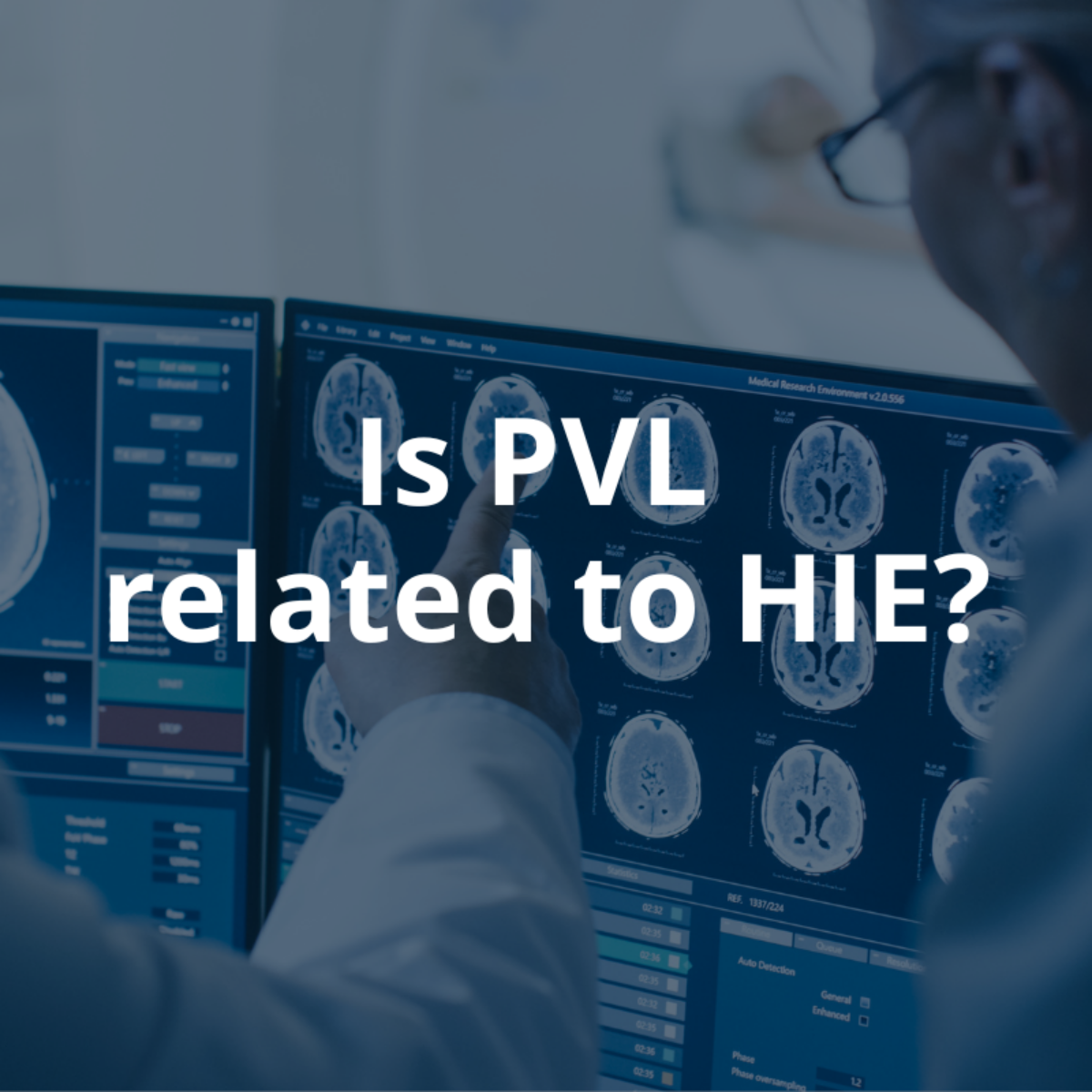
If your newborn has been diagnosed with Hypoxic-ischemic encephalopathy (HIE) or Periventricular leukomalacia (PVL), it’s understandable to have many questions. Here’s a parent-focused guide that explains what PVL is, what it may mean, and how you can support your baby.
What is HIE?
HIE occurs when a baby’s brain receives too little oxygen or blood flow around the time of birth.
In some babies, HIE can lead to injury in the white matter, resulting in PVL. Not every baby with HIE develops PVL, and the pattern of brain injury varies from child to child.
Understanding PVL: A Guide for Parents
What is PVL?
Periventricular leukomalacia (PVL) is an injury to the brain’s white matter, the tissue that carries messages between different parts of the brain. The injury occurs near the fluid-filled spaces (ventricles) in the center of the brain.
The white matter of a newborn baby’s brain is not one single structure. It is the network of nerve fibers that lies underneath the brain’s outer gray matter (the cerebral cortex) and connects different parts of the brain to one another.
Think of the brain this way:
- Gray matter = the “processing centers” (brain cells or neurons).
- White matter = the “communication highways” (the cables that connect the processing centers).
The white matter is called “white” because of a fatty coating called myelin that surrounds nerve fibers. However, newborns have much less myelin than adults, so their white matter is actually relatively immature at birth and continues developing rapidly during infancy and childhood.
The pattern and extent of white matter injury on an MRI often provide important clues about both the timing and severity of a newborn brain injury.
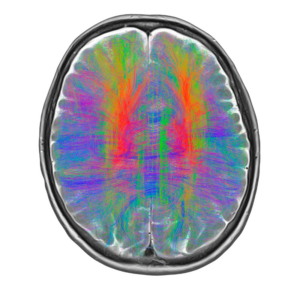 White Matter and HIE
In newborns with oxygen deprivation injuries:
- Mild to moderate injury may affect the white matter around the ventricles.
- More severe injury may involve both white matter and deeper structures of the brain.
- Premature babies are particularly susceptible to white matter injury called Periventricular Leukomalacia.
- Full-term infants with Hypoxic-Ischemic Encephalopathy may develop injury patterns involving:
- Watershed white matter injury.
- Diffuse white matter injury.
- Injury involving both white matter and the deep gray nuclei.
- Extensive injury affecting much of the brain.
Function of White Matter
White matter is responsible for carrying signals involved in:
- Walking and coordination.
- Muscle tone and movement.
- Speech and language.
- Learning and memory.
- Visual processing.
- Attention and executive functioning.
When white matter is injured, children may experience:
- Developmental delays.
- Motor difficulties.
- Learning disabilities.
- Problems with attention and processing speed.
- Cerebral palsy (particularly some forms of spastic cerebral palsy).
- Visual or sensory processing problems.
How is PVL diagnosed?
Doctors may use:
- Cranial ultrasound (using sound waves to image baby’s brain through the “soft” openings between the skull bones – the fontanelles)
- MRI (using magnets and radio waves – usually provides the clearest picture)
- Neurological examinations
- Developmental assessments over time
An MRI helps doctors understand where the injury occurred, but it cannot predict exactly how an individual child will develop.
 What does this mean for my baby?
One of the hardest parts of PVL is that no one can predict with certainty how any one baby will develop.
Some children have:
- Mild motor delays
- Mild learning or attention differences
- Typical intelligence with some physical challenges
Others may experience:
- Cerebral palsy (especially affecting the legs)
- Developmental delays
- Vision problems
- Learning difficulties
- Seizures (less common)
Many children continue to make progress for years because the developing brain has an ability to adapt and build new connections.
What signs will doctors watch for?
During infancy and early childhood, your healthcare team will monitor for:
- Muscle stiffness or unusual muscle tone
- Delays in rolling, sitting, crawling, or walking
- Feeding difficulties
- Vision concerns
- Hearing problems
- Growth and development
- Speech and language development
Some differences are not apparent immediately after birth and become clearer as babies grow.
 What treatments are available?
There is no treatment that reverses PVL once it has occurred, but early intervention can make a meaningful difference in helping children reach their potential.
Your baby may benefit from:
- Physical therapy
- Occupational therapy
- Speech and feeding therapy
- Vision services if needed
- Developmental follow-up clinics
- Pediatric neurology care
If your baby received therapeutic cooling for HIE, that treatment was intended to reduce the extent of brain injury after oxygen deprivation. It does not repair existing injury but can improve outcomes for some infants when started promptly after birth.
What can parents do?
You are an important part of your baby’s care.
Helpful things include:
- Attend all follow-up appointments.
- Enroll in early intervention services as soon as they are recommended.
- Practice therapy activities at home.
- Encourage tummy time and play when your baby’s medical team says it is safe.
- Celebrate progress, even if it comes in small steps.
- Ask questions whenever something is unclear.
Questions you may want to ask your baby’s doctors
- What did the MRI show?
- Is the PVL mild, moderate, or severe?
- Which parts of the brain are affected?
- What developmental milestones should we watch closely?
- When should therapy begin?
- How often should our baby see neurology or developmental specialists?
- What follow-up imaging or testing is recommended?
Looking ahead
Many families want to know, “Will my child walk?” or “Will my child learn normally?” Unfortunately, these questions usually cannot be answered in the newborn period.
Development unfolds over months and years. Doctors combine information from:
- The baby’s physical examinations
- MRI findings
- Developmental progress
- Response to therapy
These pieces together provide a clearer picture over time.
Finding support
Connecting with other families who have experienced HIE or PVL can be helpful. Ask your baby’s care team about:
- Hospital family support programs
- Early intervention services in your state
- Parent support groups
- Developmental follow-up clinics
Key points to remember
- PVL is an injury to the brain’s white matter.
- In some babies, PVL develops as part of the brain injury associated with HIE.
- MRI findings help guide care but do not determine exactly how an individual child will develop.
- Early therapies and regular developmental follow-up are important.
- Children’s outcomes vary widely, and many continue to gain new skills throughout childhood.
If you’re caring for a baby with PVL, maintaining close follow-up with your neonatal, neurology, and developmental care teams gives your child the best opportunity to identify needs early and provide appropriate support.
A developmental care team is a group of healthcare professionals who monitor your child’s development over time and provide therapies or medical care as needed. Not every child will need every specialist, but children with PVL often benefit from a coordinated approach.
Here’s who may be involved:
| Team member | What they do |
|---|---|
| Developmental pediatrician | Monitors overall development, behavior, learning, and helps coordinate services. |
| Pediatric neurologist | Evaluates the brain and nervous system, monitors muscle tone, movement, seizures, and developmental progress. |
| Primary care pediatrician | Oversees routine health care, growth, immunizations, and referrals to specialists. |
| Physical therapist (PT) | Helps develop strength, balance, posture, and motor skills such as rolling, sitting, crawling, and walking. |
| Occupational therapist (OT) | Works on hand skills, feeding, play, sensory processing, and daily activities appropriate for your child’s age. |
| Speech-language pathologist (SLP) | Assists with feeding and swallowing in infancy and later supports communication and language development. |
| Early Intervention (EI) providers | Deliver therapy services in the home or community for children from birth to age 3, based on the child’s needs. |
| Pediatric physiatrist (rehabilitation physician) | Specializes in improving movement and function, especially if muscle stiffness or cerebral palsy develops. |
| Ophthalmologist | Monitors vision, since some children with PVL can have visual processing or eye movement difficulties. |
| Audiologist | Performs hearing evaluations, as hearing is important for language development. |
| Neonatal follow-up clinic team | Many hospitals have specialized clinics that bring together developmental specialists, therapists, nurses, and physicians to monitor infants who had HIE or other neonatal brain injuries. |
| Social worker or case manager | Helps families access community resources, insurance support, therapy services, and emotional support. |
| Dietitian | Assists if feeding, growth, or nutrition become concerns. |
How often will my child be seen?
Follow-up schedules vary, but many infants with HIE or PVL have visits at key developmental stages, such as around:
- 3–4 months
- 6 months
- 9–12 months
- 18–24 months
- Preschool age
- School age, if needed
At each visit, the team assesses movement, muscle tone, feeding, communication, vision, hearing, learning, and social development. Therapy recommendations are adjusted as your child grows.
 What is Early Intervention?
In the United States, Early Intervention (EI) is a publicly funded program for children from birth to age 3 who have developmental delays or are at risk for them. For infants with HIE or PVL, referral to EI is often made before hospital discharge or shortly afterward. Services may include:
- Physical therapy
- Occupational therapy
- Speech and feeding therapy
- Developmental instruction
- Family education and coaching
Therapists typically work with families in the home or another familiar setting and teach strategies that can be incorporated into everyday routines.
Who coordinates all of this?
For many families, the primary care pediatrician and the neonatal follow-up clinic work together to coordinate care. They communicate with specialists, monitor progress, and help ensure your child receives appropriate evaluations and services as new needs arise.
The goal of the developmental care team is not just to identify challenges, but also to recognize your child’s strengths and provide support that helps them achieve the best possible developmental outcomes.
Do You Have a Case?
If your child had a brain ultrasound or MRI and was diagnosed with PVL and/or HIE, you may have questions about whether it could have been prevented.
You should consider contacting the HIE Newborn team as soon as possible if:
- Your baby has been diagnosed with PVL and/or a condition like hypoxic-ischemic encephalopathy (HIE), cerebral palsy, or another birth-related injury.
- You had an emergency c-section delivery, and your baby was born with signs of distress or injury (like seizures, difficulty breathing, or the need for intensive medical intervention).
- You suspect that something went wrong during labor or delivery, or you have concerns about the medical care you or your baby received, and your baby is experiencing developmental delays.
You do not need to know for certain what happened – that requires a detailed medical review to fully assess which parties were negligent.